
Car Keys and Car Lockouts in Minneapolis
Cars opened and replacement keys cut, transponder keys included, when the key is locked inside, lost or broken, or the fob has stopped working.
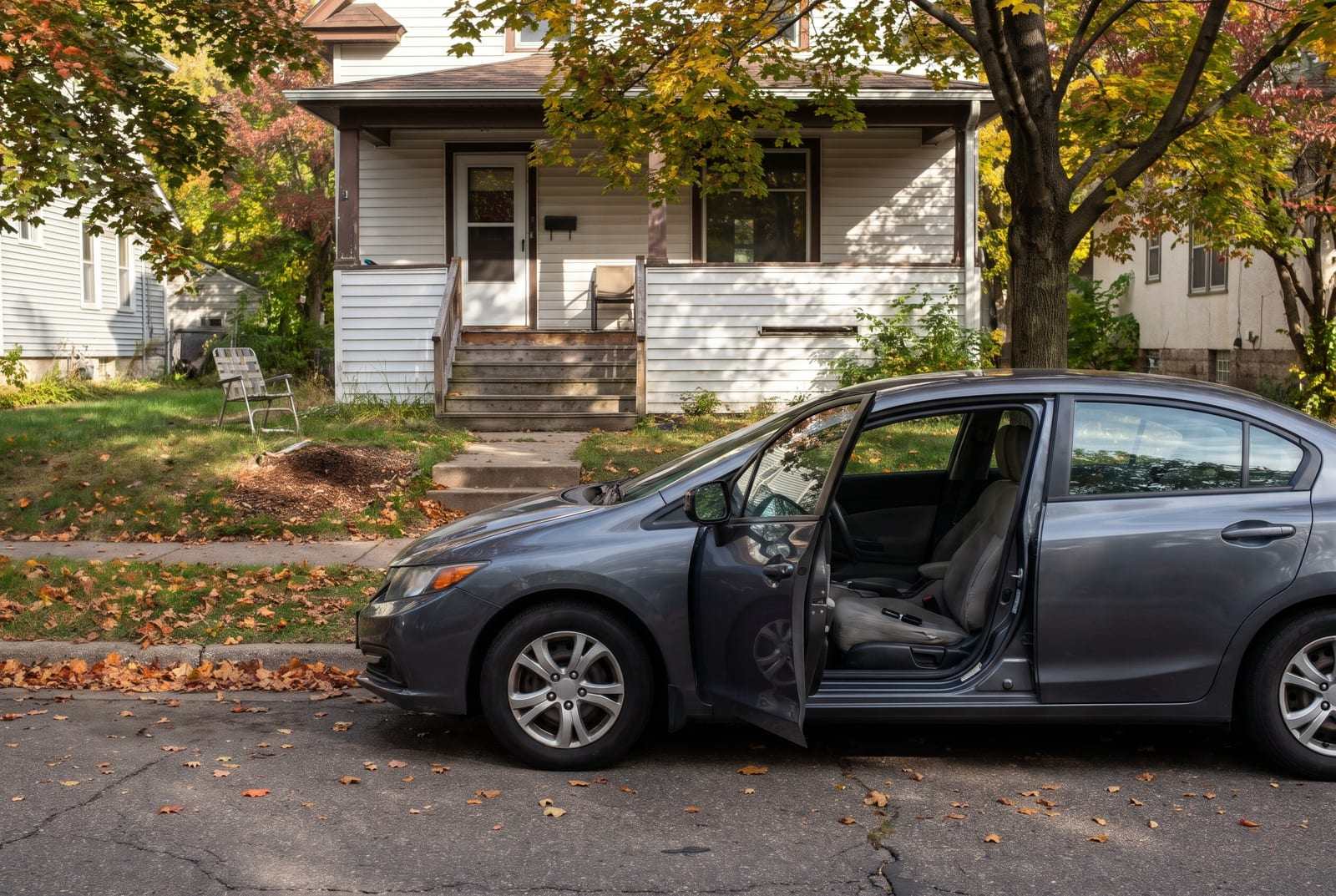
A car key used to be a piece of cut metal. On most cars built in the last twenty-five years it is also a small radio part: a chip the car must recognize before the engine will run, often with a remote or a proximity fob besides. The year, make and model decide which kind a car takes, and so what replacing it involves.
Minneapolis winters add their own trouble: fob batteries fade in the cold, door locks freeze, and cars left running to warm up get locked with the key inside. If that is where you are now, call (612) 662-1116 with the car’s location and its year, make and model.
| Situation | What is involved | What to have ready |
|---|---|---|
| Locked out | Opening the door without marking the paint, glass or weatherstrip | Where the car is, and papers showing it is yours |
| Lost key | A new key cut to the car and, if it has a chip, paired with it | Year, make, model, the VIN and proof of ownership |
| Spare key | A copy of a working key, its chip paired if it has one | The working key and the car |
| Broken key | A new key cut from the pieces or by code, its chip moved or paired | Both pieces, and any spare |
| Key fob problem | Often the battery; sometimes worn buttons, a cracked case or a lost pairing | The fob, and the spare fob if there is one |
Opening a Locked Car
Locksmiths usually open a car through the top of the door. A soft air wedge eases the frame out a few millimeters, and a long-reach tool goes through the gap to press the unlock switch or lift the inside handle. Done with care, it leaves no mark.
The old slim jim, a strip of metal slid down inside the door, suits few modern cars, whose doors hold wiring, side airbags and linkages a blind tool can unhook; a coat hanger does the same harm and tears the weatherstrip too. Frameless windows, alarms and locks that disable the inside handle all change the approach, which is why the make and model come up on the phone.
Transponder Keys and the Immobilizer
A transponder key carries a small chip in its head with no battery of its own. When the key turns in the ignition, or sits near the start button, an antenna around the ignition powers the chip for an instant and reads its code. If the code matches one stored in the car’s immobilizer, the engine runs; if not, it may start and stall, or not crank at all.
Replacing one is therefore two jobs: the blade is cut to fit the car’s locks, and the chip is paired with the immobilizer. Some models accept a new key added with two working keys and a set sequence; most need a programming tool on the diagnostic port; a few accept new keys only through the maker’s own systems.
What is a transponder key?
A car key with a chip in its head that the car checks before the engine will run. A thick plastic head on a metal blade is the usual sign, and the owner’s manual says for certain. A transponder key cut to fit but never paired opens the doors and turns in the ignition, but the engine will not run for long, if it starts at all.
Laser-Cut Keys, Remote Fobs and Push-to-Start
A laser-cut key, sometimes called a sidewinder, has a groove milled along the flat of a thick blade instead of notches along its edge. It needs a different cutting machine from an ordinary key and is harder to copy.
A remote fob works the door locks by radio and runs on a coin battery. Many are built into the key head beside the transponder chip, but the two are separate parts, each paired with the car on its own: the chip starts the car, the buttons work the locks.
A push-to-start car senses its proximity key once the key is close. One fob carries the immobilizer code and the remote, and most hide a metal blade for the driver’s door. With a flat battery, many cars still start when the fob is held against the start button, as the owner’s manual shows.
Some newer keys may have to come from a dealer. A few makers keep the key codes or the pairing for certain models within their dealer networks, and some proximity keys are made to order for one car. The year, make and model show early whether a car is one of them.
My fob works but its buttons are dead. Is that a key problem?
Usually it is the battery. The chip that starts the car draws nothing from the fob’s battery, so a fob with a flat battery can still start the engine while its buttons do nothing. A new coin battery, of the type printed on the old one, is the first thing to try.
If that changes nothing, try the spare. If the spare works, the first fob has worn buttons, a broken contact or a lost pairing; if neither works, the fault is more likely in the car than in the keys.
Year, Make, Model and Papers
A locksmith making a key for a car generally needs to see that the car is yours, so the details and the papers come first:
- Make. Each carmaker uses its own key blanks, its own chips and its own way of pairing them.
- Model. Two models from one maker, or two trims of one model, can take different keys: a turn key on one, a proximity fob on the other.
- Year. A new generation of a model can change the key from one year to the next.
- Proof of ownership. The title or the registration in your name. A registration in the glove box can be checked once the car is open.
- A photo ID. A driver’s license or state ID with the same name as the title or registration.
The VIN, on a small plate at the base of the windshield, identifies the car exactly and can be read from outside.
Can a key be made if every key to the car is lost?
In most cases, yes. The key is cut by decoding a lock on the car or from its key code, and a chipped key is then paired with the car. With no working key, some cars need their stored keys erased and the new ones added in one sitting, which also stops the lost key from starting the car; a small number of newer cars take a new key only through the dealer.
Proof of ownership matters most here, since there is no key to show that the car is yours.
A Second Key for the Car
A spare made while a working key exists is a smaller job than a key made from nothing: the blade is copied, and a chipped key is paired while the working one is at hand.
To arrange a spare, send the year, make and model through Schedule an Estimate.